While other bloggers have made predictions of how the outcome of the Presidential elections will have an impact on the Supreme Court or the economy, those weighty issues fall beyond this blog’s purview. However, we should ask “what will happen to interactive marketing if President Obama wins re-election or if Governor Romney unseats him?”
Here’s why: the Senate recently opened an inquiry into data brokers. While a representative of the Direct Marketing Association dismissed the inquiry as “a baseless fishing expedition” (translation: oh, shit), the inquiry could have an impact on what marketers now consider standard marketing practices.
Moreover, the man who will sit in the Oval Office will have the choice to broaden or narrow that impact. In turn, marketers will have to adjust to these two possible worlds.
The short answer: hedge against potential legislation by making the most of your own data.
Thursday, October 25, 2012


Wednesday, October 24, 2012
Status and STATUS
How come status updates don’t actually confer capital-S-Status?
I had an enlightening conversation with a fellow dad while we dropped of our second-graders at school. Said dad works as a video engineer. Among other projects, he helps independent filmmakers by handling a lot of the more unglamorous tasks of producing a film. Yes, even less glamorous than editing.
Among other things, we talked about how social media has an impact on our jobs. However, he had an entirely different frame of reference on “social” than I did. That is, he talked about his current project, which involves turning a critically-acclaimed novel into a film. He mentioned that the film’s investors put money into the project, not because they expected to participate in the artistic process, not because they wanted to make tons of money but by-and-large because they wanted the capital-S-Status of a production credit.
And that, friends, points to a glaring deficiency of social networking. Everyone participates as an equal. However, this deficiency offers itself up as a potential opportunity for marketers.
I had an enlightening conversation with a fellow dad while we dropped of our second-graders at school. Said dad works as a video engineer. Among other projects, he helps independent filmmakers by handling a lot of the more unglamorous tasks of producing a film. Yes, even less glamorous than editing.
Among other things, we talked about how social media has an impact on our jobs. However, he had an entirely different frame of reference on “social” than I did. That is, he talked about his current project, which involves turning a critically-acclaimed novel into a film. He mentioned that the film’s investors put money into the project, not because they expected to participate in the artistic process, not because they wanted to make tons of money but by-and-large because they wanted the capital-S-Status of a production credit.
And that, friends, points to a glaring deficiency of social networking. Everyone participates as an equal. However, this deficiency offers itself up as a potential opportunity for marketers.
Friday, October 19, 2012
Strategy = Economy
Pity the poor word “strategy.” Marketers--and pretty much everyone else in the white-collar world--throw it around like a Nerf ball. Every marketer has a creative strategy, a brand strategy, a media strategy, a social networking strategy and for all I know a bathroom strategy.
Funny thing is, no one ever stops to ask “what exactly does strategy mean, anyway?”
The term tends to conjure up images of people wearing heavy black glasses (thanks, Henry Kissenger) and maybe the war room from “Dr. Strangelove.” However, a working definition remains rare. I’ve give it a go, then.
Funny thing is, no one ever stops to ask “what exactly does strategy mean, anyway?”
The term tends to conjure up images of people wearing heavy black glasses (thanks, Henry Kissenger) and maybe the war room from “Dr. Strangelove.” However, a working definition remains rare. I’ve give it a go, then.

Thursday, October 18, 2012
Will Marketing Become Politics?
Familiarity breeds contempt.
Nowhere does this adage seem more appropriate than in the realm of the current Presidential election. Voters have now seen so much of President Barack Obama and of Governor Mitt Romney that they can now hate them for any number of reasons based on policy, their wives, choices of attire or hand gestures. Moreover, their supporters and detractors seem to have fossilized into violently opposed camps.
Welcome to marketing, circa 2025.
Nowhere does this adage seem more appropriate than in the realm of the current Presidential election. Voters have now seen so much of President Barack Obama and of Governor Mitt Romney that they can now hate them for any number of reasons based on policy, their wives, choices of attire or hand gestures. Moreover, their supporters and detractors seem to have fossilized into violently opposed camps.
Welcome to marketing, circa 2025.
Tuesday, October 9, 2012
Ambient TV
Well, the wife left the TV in the living room on HGTV over the weekend, and since I find it easier to think about marketing than to fish the remote out of the couch cushions, I now have an idea to share. Namely, what I’ll call Ambient TV offers marketers a great opportunity not on the small screen, but on the smaller ones--PC and mobile Internet.
Marketing pundits sometimes talk about “lean forward” and “lean back” media. “Learn forward” consists of media that engage consumers heavily, such as web and mobile while “lean back” refers to more passive media such as TV and radio. While this distinction serves as a good dividing line, it shades over another worthy distinction--the degrees of leaning back.
On the one hand, viewers engage very directly with certain kinds of programming--sports, awards shows, the news, popular dramas and so forth. On the other hand, networks like HGTV, The Weather Channel and the Food Network seem to invite behavior more like grazing than active viewing.
I can’t imagine that we’re the only family in America who tunes into Local on the 8s only to realize an hour later that we haven’t changed the channel. I also can’t imagine that other car guys don’t find Mecum Auctions programming on Speed TV oddly soothing with their mixture of shiny cars, vintage auto specs and the droning of the auctioneer.
Since these programs often sit in the background, I think they serve as Ambient TV, much in the way that Brian Eno developed Ambient Music in the 1970s. However, the real action doesn’t happen on TV, it happens online.
Marketing pundits sometimes talk about “lean forward” and “lean back” media. “Learn forward” consists of media that engage consumers heavily, such as web and mobile while “lean back” refers to more passive media such as TV and radio. While this distinction serves as a good dividing line, it shades over another worthy distinction--the degrees of leaning back.
On the one hand, viewers engage very directly with certain kinds of programming--sports, awards shows, the news, popular dramas and so forth. On the other hand, networks like HGTV, The Weather Channel and the Food Network seem to invite behavior more like grazing than active viewing.
I can’t imagine that we’re the only family in America who tunes into Local on the 8s only to realize an hour later that we haven’t changed the channel. I also can’t imagine that other car guys don’t find Mecum Auctions programming on Speed TV oddly soothing with their mixture of shiny cars, vintage auto specs and the droning of the auctioneer.
Since these programs often sit in the background, I think they serve as Ambient TV, much in the way that Brian Eno developed Ambient Music in the 1970s. However, the real action doesn’t happen on TV, it happens online.
Monday, October 1, 2012
How to Use a Subject Matter Expert
The photography world descended on Cologne, Germany last week for the biennial trade fair known as Photokina. Sony showed off at $2,700 compact camera. Leica, the Duesenberg of the camera world, showed off their latest and greatest wunderkamera, the M, yours for just a tick under seven grand. Of course, you cheapskates can make do with the lowly M-E for $5,450. And Hasselblad, purveyors of Neil Armstrong’s moon camera, previewed their latest bijou, the as-yet-unpriced Lunar.
So what did Adorama, the mighty camera emporium, feature in one of its email newsletters this week? A oversized frisbee for $17. And that, friends, is how you use a subject matter expert to enliven your communications.
Don’t get it? Let’s discuss how this approach works.
So what did Adorama, the mighty camera emporium, feature in one of its email newsletters this week? A oversized frisbee for $17. And that, friends, is how you use a subject matter expert to enliven your communications.
Don’t get it? Let’s discuss how this approach works.
Tuesday, September 25, 2012
So, I Won a Watch
So last Friday, this happened:
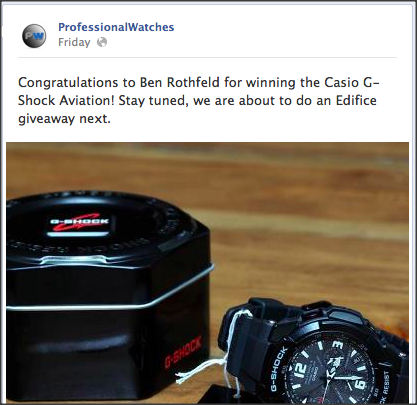
Now, what will ProfessionalWatches and Casio, the sponsors, do with me now that they’ve gotten me to click the “like” button? Here’s what I’d suggest for Casio.
[break]
First of all, I assure you that this sweepstakes is bona fide. ProfessionalWatches really does publish a blog, one I read daily. Casio does produce wristwatches, among other things. I have no doubt that I will receive my watch, which has some really cool functions.
Back to the point. Attracting likes, especially via a sweeptakes, always reminds me of a poster you probably remember from high school:
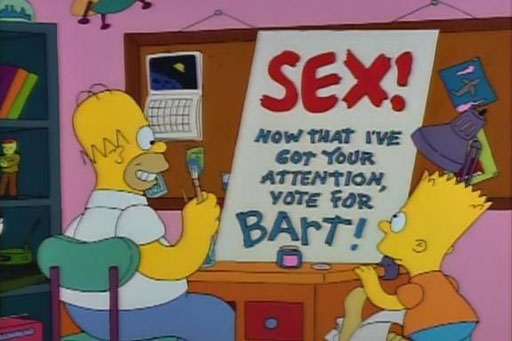
Really, garnering a “like” only ensures a brief span of attention from the consumer. Sure, updates from the brand will appear in the consumer’s newsfeed, but he or she has no added incentive to read the updates and can always “unlike” later.
Casio has a few options on its hands (pun intended):
So, what should Casio do, especially given the short time that it may have to make use of entrants’ attention and that any message they send to new fans will go to older fans as well?
My contrarian answer is: D, none of the above.
OK, any of the above would work to some extent for Casio, or many other brands for that matter. It looks like they currently do all of them. Certainly, a newsfeed consisting exclusively of offers would probably annoy consumers and drive disengagement, but a few choice purchase opportunities couldn’t hurt. Likewise, product updates and brand engagement have their benefits, too.
However, Casio really has on its hands a number of suspects--people who may or may not have any real interest in spending good coin on their brand. We’ve discussed this situation before, and I’ve suggested vetting participants quickly and broadly.
In the world of email, this approach works pretty simply--send out a message with options for response and send additional emails accordingly. However, social media don’t work like email. People don’t subscribe so much as they listen in now and again.
Really, it’s like starting to watch a TV show that’s already made it to season three. Hopefully, the brand has begun a meaningful conversation with its fans. However, new fans might not be able to follow this conversation.
I mean, imagine getting into LOST after the polar bear, wait...I mean before the Black Rock, wait... OK, I mean, try starting to watch LOST at any point after the pilot and you’ll get the idea.
As a result, Casio ought to spend its first few messages after the content to familiarize the newbies with some broad brand content. I suspect that they have four or five messages (assuming no more than one per day) to bring the new fans up to speed on brand heritage or design philosophy or whatever else sets Casio apart. After that, interested parties will continue to read and get into the swing of things while the folks who just wanted a free watch will fade away.
And, no. I’m not selling my new watch. Buzz off.
Cool. Serious watch geek cred.
Now, what will ProfessionalWatches and Casio, the sponsors, do with me now that they’ve gotten me to click the “like” button? Here’s what I’d suggest for Casio.
[break]
First of all, I assure you that this sweepstakes is bona fide. ProfessionalWatches really does publish a blog, one I read daily. Casio does produce wristwatches, among other things. I have no doubt that I will receive my watch, which has some really cool functions.
Back to the point. Attracting likes, especially via a sweeptakes, always reminds me of a poster you probably remember from high school:
I wonder if a sexual health organization ever made a poster that said “chess club” at the top and then “now that all the perverts have stopped reading...”
Really, garnering a “like” only ensures a brief span of attention from the consumer. Sure, updates from the brand will appear in the consumer’s newsfeed, but he or she has no added incentive to read the updates and can always “unlike” later.
Casio has a few options on its hands (pun intended):
- Sell watches, stupid. Casio sells watches for anywhere from under $10 to several hundred dollars. Offering several models at impulse-buy prices gives Casio the opportunity to make a quick sale on Facebook with periodic offers, perhaps in concert with a respected retailer such as Amazon or Target.
- Keep consumers informed. Casio develops new products all the time. Facebook offers a great opportunity to get the word out. Most likely, keeping fans informed really means getting them ready to buy, but let’s keep the two options separate for now.
- Encourage brand advocacy. By speaking with fans, Casio can potentially get them to brag about the brand. For instance, it seems that almost all people who own watches own at least one Casio model. I have one and owned at least half a dozen others over the years. However, not all owners wear theirs every day. So why not use Facebook to encourage owners to give their Casios what the watch nuts call “wrist time?”
My contrarian answer is: D, none of the above.
OK, any of the above would work to some extent for Casio, or many other brands for that matter. It looks like they currently do all of them. Certainly, a newsfeed consisting exclusively of offers would probably annoy consumers and drive disengagement, but a few choice purchase opportunities couldn’t hurt. Likewise, product updates and brand engagement have their benefits, too.
However, Casio really has on its hands a number of suspects--people who may or may not have any real interest in spending good coin on their brand. We’ve discussed this situation before, and I’ve suggested vetting participants quickly and broadly.
In the world of email, this approach works pretty simply--send out a message with options for response and send additional emails accordingly. However, social media don’t work like email. People don’t subscribe so much as they listen in now and again.
Really, it’s like starting to watch a TV show that’s already made it to season three. Hopefully, the brand has begun a meaningful conversation with its fans. However, new fans might not be able to follow this conversation.
I mean, imagine getting into LOST after the polar bear, wait...I mean before the Black Rock, wait... OK, I mean, try starting to watch LOST at any point after the pilot and you’ll get the idea.
As a result, Casio ought to spend its first few messages after the content to familiarize the newbies with some broad brand content. I suspect that they have four or five messages (assuming no more than one per day) to bring the new fans up to speed on brand heritage or design philosophy or whatever else sets Casio apart. After that, interested parties will continue to read and get into the swing of things while the folks who just wanted a free watch will fade away.
And, no. I’m not selling my new watch. Buzz off.
Subscribe to:
Posts (Atom)