Wednesday, April 23, 2014

Dicing with Danger: Using Data Insights in Your Marketing

If you've suffered through my last two blog posts (#1 here, #2 here), you've read my reasoning that while marketing data potentially can lead your business into danger, they can also provide meaningful insight.

Now what?


With insight, you can start placing bets with data.

Hit it, Frankie:


While you will never out-cool Albert Francis Sinatra, you can probably make smarter bets.  Here's how.

Tuesday, April 15, 2014

Playing with Danger: How to Ask Questions of your Data

In my last post, I discussed marketing data as the most dangerous thing in your office and outlined how to tame it.  Now, let's talk about how to draw insights from your data.

First, ask yourself a question: are you Nate Silver?  If you are...um, hi, Nate.  Thanks for reading.  But more importantly, if you're Nate Silver or an honest-to-God data wizard, then you already know what you can and can't do with data.  You can run all kinds of exotic analyses and make wild predictions that come to fruition.  In short, you have nothing to learn from me.  Godspeed.

If you're still reading, then you need to understand one thing: data don't tell you anything other than how to guess well.  However, good guesses can help you more than you might think.


Wednesday, April 2, 2014

The Most Dangerous Thing in Your Office

Take a look around your office and pick out the most dangerous thing you see.

Is it cleaning fluid?

Is it your espresso maker?

Maybe your paper cutter?

No, no and no.  Well, unless you have a REALLY big paper cutter.

No, friend, the most dangerous thing in your office doesn't have sharp edges, heating elements or questionable chemicals.  The most dangerous thing in your office has something far more treacherous: your marketing data.


Tuesday, March 25, 2014

Where the creativity HASN'T gone on cable

As this season of The Walking Dead draws to a close, it reminds us how how great cable TV--once the province of wrestling and Andy Griffith reruns--has become.  With tight scripting, intense characters and even serviceable CGI, cable has become a go-to outlet for great TV.  Even apart from HBO, cable has given us Mad Men, Breaking Bad and The Americans.

More than one critic has complained that, if anything, cable gives us too much good programming to watch.

So why do ads on cable TV fail to engage as well as the programming they fund?  More to the point, why hasn't this haven for direct response TV advertising (DRTV) emerged as laboratory for breakthrough creative?


Sunday, February 9, 2014

Even Amazonians Get the Blues

Cheer up, marketing folks.  Even Amazon gets it wrong sometimes.

If you've worked in digital marketing, you've heard a client ask why you can't do something that Amazon does.  Maybe they asked for an email campaign triggered by browsing behavior.  Maybe they asked for a model to guess what a customer might want to purchase next.

Amazon is to digital marketers what Nike or Apple is to brand marketers: the go-to paragon of excellence.  In some ways, all these brands succeed in their respective fields because of the same reason: heavy investment.  We know "Just Do It" and Apple's various advertising platforms because they invest heavily in media weight.  Similarly, Amazon invests heavily in technology to enable their wizardry.

Amazon has another advantage as well: time.  Or, rather, lack thereof.  Because Amazon's systems only date to the start of the Internet age, they have no old, cranky technology to limit growth.
Still, even they mess up from time to time.  Perhaps more to the point, they also know how to make good when they do.

Last Saturday (1st February). I put in an order for several books, a Chromebook and a cheap envelope-style case for the Chromebook.  I selected free shipping because I'm a tightwad.

Amazon informed me that I would receive most of the items by the 10th, which suited us fine since we intended to give the books to our kids for Valentine's Day.  However, one book was on back-order and would be shipped separately.  No problem.

As is my wont, I began checking up on my order status every few hours from the moment I placed the order.  After a few days, I became concerned that the order hadn't shipped.  I chatted with Amazon's customer service and they assured me that the order would still arrive by the 10th.

The following Saturday, the 8th, the order had still not shipped.  So back to Amazon's chat I went.  Eventually, the customer service representative explained that the cheap computer case was holding up the order.  They didn't have it in stock.

Let me put it another way: Amazon told me they didn't have one item I ordered in stock but not another item.  Even more perplexing, the computer case was an Amazon-branded item sold by Amazon itself rather than a partner.  Dish out a big bowl of WTF.

Fortunately, the story has a happy ending.  The rep helped me find another case that was in stock and then (after I mentioned that I had hoped to give the books to my kids for Valentine's Day) upgraded me to two-day shipping at no charge.  Amazon kept a loyal customer and I get my purchases in time.

What should marketers take away from my (admittedly prosaic) experience?  Not even the best technology can account for every eventuality.  Even Amazon drops a stitch now and again.  However, people can succeed where technology fails.

So, marketing pals and gals, think about your own technology challenges and what you can't do when a client or stakeholder asks you to do something "just like Amazon." Then think about what your people can do to fill the gap.
Tuesday, June 25, 2013

Winning in the Post-Brand Era (post 4 of 4)

Read post 1 here
Read post 2 here
Read post 3 here

Now what?

Marketers have reached an era when branding has lost some of its mojo.  The ongoing excellence of highly targeted marketing tools counterweigh the classic brand by making it possible to drive sales at a sharply reduced cost.  Marketers now must ask themselves "what's the best mix of approaches to accomplish our goals?"  How do marketers win in a world where they can't expect the brand to serve as the organizing principle?

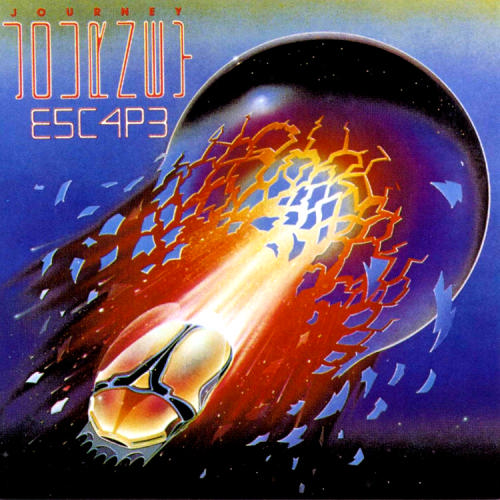
Marketers must shift their focus from the destination, so to speak, to the Journey.


No, not that Journey


Still the wrong Journey


Now you're cooking with gas

McKinsey Consulting promulgated the concept of the Customer Journey a few years ago as a means for comparing disparate purchase paths.  However, it also doubles as a nifty way for organizing marketing communications.

Friday, June 21, 2013

Defining the Post-Brand Era (post 3 of 4)

See Post 1 (Welcome to the Post-Brand Era)
See Post 2 (How The Brand Era Happened)

Most marketers can recognize the calling cards of the Brand Era--USPs, mass media, sponsorships and so forth.  However, they may not recognize the Post-Brand Era.  Simply put, the Post-Brand era describes the present marketing environment in which brands no longer comprise the only--or even the most efficient--means for finding and keeping customers.  Other marketing approaches have arisen to shoulder the burden.  These approaches all share one common trait: situational relevance.

In other words, we now market in an environment where we can predict the right place, the right time or, sometimes, the right price that will overwhelm the right brand.

To understand the Post-Brand Era, we should first consider the factors that led to its emergence.  As many would expect, technology played a major role.  However, the technology in question isn't SoLoMo (social, local, mobile), the Internet or even the computer.  Instead, a technology ecosystem enabling communication and commerce with widely dispersed and decentralized tendrils reaching nearly everywhere on the planet led the way.


You call it the Post Office.