As this season of The Walking Dead draws to a close, it reminds us how how great cable TV--once the province of wrestling and Andy Griffith reruns--has become. With tight scripting, intense characters and even serviceable CGI, cable has become a go-to outlet for great TV. Even apart from HBO, cable has given us Mad Men, Breaking Bad and The Americans.
More than one critic has complained that, if anything, cable gives us too much good programming to watch.
So why do ads on cable TV fail to engage as well as the programming they fund? More to the point, why hasn't this haven for direct response TV advertising (DRTV) emerged as laboratory for breakthrough creative?
Tuesday, March 25, 2014


Sunday, February 9, 2014
Even Amazonians Get the Blues
Cheer up, marketing folks. Even Amazon gets it wrong sometimes.
If you've worked in digital marketing, you've heard a client ask why you can't do something that Amazon does. Maybe they asked for an email campaign triggered by browsing behavior. Maybe they asked for a model to guess what a customer might want to purchase next.
Amazon is to digital marketers what Nike or Apple is to brand marketers: the go-to paragon of excellence. In some ways, all these brands succeed in their respective fields because of the same reason: heavy investment. We know "Just Do It" and Apple's various advertising platforms because they invest heavily in media weight. Similarly, Amazon invests heavily in technology to enable their wizardry.
Amazon has another advantage as well: time. Or, rather, lack thereof. Because Amazon's systems only date to the start of the Internet age, they have no old, cranky technology to limit growth.
Still, even they mess up from time to time. Perhaps more to the point, they also know how to make good when they do.
Last Saturday (1st February). I put in an order for several books, a Chromebook and a cheap envelope-style case for the Chromebook. I selected free shipping because I'm a tightwad.
Amazon informed me that I would receive most of the items by the 10th, which suited us fine since we intended to give the books to our kids for Valentine's Day. However, one book was on back-order and would be shipped separately. No problem.
As is my wont, I began checking up on my order status every few hours from the moment I placed the order. After a few days, I became concerned that the order hadn't shipped. I chatted with Amazon's customer service and they assured me that the order would still arrive by the 10th.
The following Saturday, the 8th, the order had still not shipped. So back to Amazon's chat I went. Eventually, the customer service representative explained that the cheap computer case was holding up the order. They didn't have it in stock.
Let me put it another way: Amazon told me they didn't have one item I ordered in stock but not another item. Even more perplexing, the computer case was an Amazon-branded item sold by Amazon itself rather than a partner. Dish out a big bowl of WTF.
Fortunately, the story has a happy ending. The rep helped me find another case that was in stock and then (after I mentioned that I had hoped to give the books to my kids for Valentine's Day) upgraded me to two-day shipping at no charge. Amazon kept a loyal customer and I get my purchases in time.
What should marketers take away from my (admittedly prosaic) experience? Not even the best technology can account for every eventuality. Even Amazon drops a stitch now and again. However, people can succeed where technology fails.
So, marketing pals and gals, think about your own technology challenges and what you can't do when a client or stakeholder asks you to do something "just like Amazon." Then think about what your people can do to fill the gap.
Tuesday, June 25, 2013
Winning in the Post-Brand Era (post 4 of 4)
Read post 1 here
Read post 2 here
Read post 3 here
Now what?
Marketers have reached an era when branding has lost some of its mojo. The ongoing excellence of highly targeted marketing tools counterweigh the classic brand by making it possible to drive sales at a sharply reduced cost. Marketers now must ask themselves "what's the best mix of approaches to accomplish our goals?" How do marketers win in a world where they can't expect the brand to serve as the organizing principle?
Marketers must shift their focus from the destination, so to speak, to the Journey.
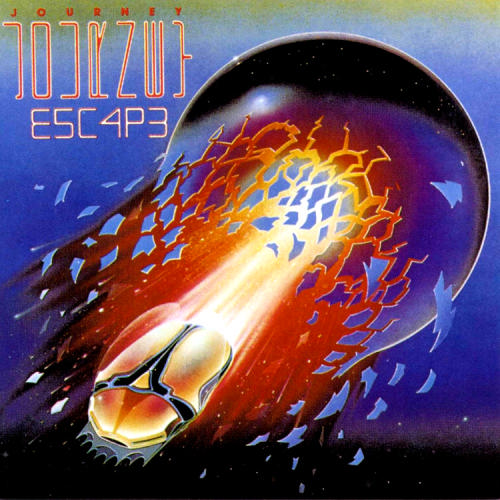

Read post 2 here
Read post 3 here
Now what?
Marketers have reached an era when branding has lost some of its mojo. The ongoing excellence of highly targeted marketing tools counterweigh the classic brand by making it possible to drive sales at a sharply reduced cost. Marketers now must ask themselves "what's the best mix of approaches to accomplish our goals?" How do marketers win in a world where they can't expect the brand to serve as the organizing principle?
Marketers must shift their focus from the destination, so to speak, to the Journey.
No, not that Journey
Still the wrong Journey
Now you're cooking with gas
McKinsey Consulting promulgated the concept of the Customer Journey a few years ago as a means for comparing disparate purchase paths. However, it also doubles as a nifty way for organizing marketing communications.
Friday, June 21, 2013
Defining the Post-Brand Era (post 3 of 4)
See Post 1 (Welcome to the Post-Brand Era)
See Post 2 (How The Brand Era Happened)
Most marketers can recognize the calling cards of the Brand Era--USPs, mass media, sponsorships and so forth. However, they may not recognize the Post-Brand Era. Simply put, the Post-Brand era describes the present marketing environment in which brands no longer comprise the only--or even the most efficient--means for finding and keeping customers. Other marketing approaches have arisen to shoulder the burden. These approaches all share one common trait: situational relevance.
In other words, we now market in an environment where we can predict the right place, the right time or, sometimes, the right price that will overwhelm the right brand.
To understand the Post-Brand Era, we should first consider the factors that led to its emergence. As many would expect, technology played a major role. However, the technology in question isn't SoLoMo (social, local, mobile), the Internet or even the computer. Instead, a technology ecosystem enabling communication and commerce with widely dispersed and decentralized tendrils reaching nearly everywhere on the planet led the way.
.jpg)
You call it the Post Office.
See Post 2 (How The Brand Era Happened)
Most marketers can recognize the calling cards of the Brand Era--USPs, mass media, sponsorships and so forth. However, they may not recognize the Post-Brand Era. Simply put, the Post-Brand era describes the present marketing environment in which brands no longer comprise the only--or even the most efficient--means for finding and keeping customers. Other marketing approaches have arisen to shoulder the burden. These approaches all share one common trait: situational relevance.
In other words, we now market in an environment where we can predict the right place, the right time or, sometimes, the right price that will overwhelm the right brand.
To understand the Post-Brand Era, we should first consider the factors that led to its emergence. As many would expect, technology played a major role. However, the technology in question isn't SoLoMo (social, local, mobile), the Internet or even the computer. Instead, a technology ecosystem enabling communication and commerce with widely dispersed and decentralized tendrils reaching nearly everywhere on the planet led the way.
You call it the Post Office.
Friday, June 14, 2013
How the Brand Era Happened (post 2 of 4)
See post 1 of 4 here.
As we'll discuss, marketing has evolved into the post-brand era, a time in which the traditional promise-driven brand means less than it used to mean. Instead, alternative approaches--largely addressable--have emerged to challenge the brand's dominance. In other words, we can no longer build marketing campaigns around a single idea and must instead complement branding with other approaches to convince audiences.
However, before delving into the post-brand era, we should spend some time defining the brand era and how it got that way. Simply put, the brand as we know it today arose in 19th Century America to serve manufacturers and service providers amidst changing technologies. They used brands to augment and/or replace traditional salesmanship.
Understanding the 19th-century technologies that led to the rise of brands will help us give context to the 20th- and 21st-century technologies that currently challenge the brand construct.
As we'll discuss, marketing has evolved into the post-brand era, a time in which the traditional promise-driven brand means less than it used to mean. Instead, alternative approaches--largely addressable--have emerged to challenge the brand's dominance. In other words, we can no longer build marketing campaigns around a single idea and must instead complement branding with other approaches to convince audiences.
However, before delving into the post-brand era, we should spend some time defining the brand era and how it got that way. Simply put, the brand as we know it today arose in 19th Century America to serve manufacturers and service providers amidst changing technologies. They used brands to augment and/or replace traditional salesmanship.
Understanding the 19th-century technologies that led to the rise of brands will help us give context to the 20th- and 21st-century technologies that currently challenge the brand construct.
Monday, June 10, 2013
Welcome to the Post-Brand Era
The modern brand has a had a good run.
Born in the years after the U.S. Civil War, the modern brand owes its genesis to the near-simultaneous emergence of three mass phenomena--mass production, mass transportation and, most importantly, mass media. The brand developed and grew over a century and a half and has, I think, reached its zenith due to the emergence of more diversified production, just-in-time delivery and, most importantly, the ubiquity of addressable (read: individualized) media.
Brands and branding will never die; nothing useful ever does. However, the brand will recede in its importance, giving ground to ever-more personalized and individually-relevant forms of marketing. Marketers who continue to ply the trade will have to adapt for the post-brand era.
Over the next few posts (I'm planning three, but you know how I like to prattle on), I'll outline the specifics:
Born in the years after the U.S. Civil War, the modern brand owes its genesis to the near-simultaneous emergence of three mass phenomena--mass production, mass transportation and, most importantly, mass media. The brand developed and grew over a century and a half and has, I think, reached its zenith due to the emergence of more diversified production, just-in-time delivery and, most importantly, the ubiquity of addressable (read: individualized) media.
Brands and branding will never die; nothing useful ever does. However, the brand will recede in its importance, giving ground to ever-more personalized and individually-relevant forms of marketing. Marketers who continue to ply the trade will have to adapt for the post-brand era.
Over the next few posts (I'm planning three, but you know how I like to prattle on), I'll outline the specifics:
- The brand and how it got that way
- What the post-brand era means
- How marketers should work in the post-brand era
However, let me summarize as briefly as I can.
Monday, June 3, 2013
When Your Logo Isn't a Logo
Minor controversy emerged here in New York City last week as the Mayor's office unveiled a new symbol to indicate accessibility for people with disabilities:


New Icon
Old Icon
The new symbol garnered some negatives from critics, as noted in this article. Among other things, blind people objected because the icon seems to equate disabilities with mobility disabilities only, thus leaving blind or perhaps deaf people out.
Moreover, others simply didn't see a need to change. After all, the traditional wheelchair symbol enjoys universal recognition in the industrialized world.
So why change? I'd argue that more than saying "this facility offers access to people with disabilities," it serves another perhaps higher purpose--branding disability.
Subscribe to:
Posts (Atom)